
Bringing the Tasting Room Home
There is something undeniably appealing about a professional wine tasting. The hushed attention, the beautiful glassware, the slow discovery of flavors you never knew existed. But you do not need a vineyard backdrop or a sommelier's certification to create that experience. With a little planning, the right glassware, and a thoughtful selection of wines, you can host an elegant wine tasting in your own home that rivals anything a tasting room offers.
Home tastings have a distinct advantage over formal events: comfort. Your guests are relaxed, the pace is yours to set, and the conversation flows naturally. Here is how to plan every detail for an unforgettable evening.
Planning Your Tasting
Choose a Theme
A theme gives your tasting structure and makes the experience educational as well as enjoyable. Here are several approaches that work beautifully.
Regional focus. Select five or six wines from a single region, such as Burgundy, Napa Valley, or Rioja. This lets guests explore how terroir, microclimate, and winemaking traditions shape the character of wines from the same area.
Varietal comparison. Choose one grape variety and source it from different regions. A Pinot Noir tasting featuring bottles from Oregon, Burgundy, New Zealand, and Sonoma reveals how dramatically the same grape can express itself in different environments.
Old World vs New World. Pair traditional European wines against their New World counterparts. A French Chablis next to an Australian Chardonnay, or an Italian Barolo alongside an Argentine Malbec.
Blind tasting. Cover the bottles and let guests taste without knowing what they are drinking. This removes label bias and leads to surprising, honest reactions. Reveal the wines at the end for a memorable moment.
How Many Wines
For a comfortable tasting, plan for five to eight wines. Fewer than five feels thin; more than eight causes palate fatigue and makes it difficult for guests to remember earlier wines. Six is the sweet spot for most home tastings.
Guest Count
Eight to twelve guests is ideal. This is small enough for everyone to participate in conversation but large enough to generate diverse opinions and lively discussion. Provide each guest with at least one glass per wine, or plan for thorough rinsing between pours.
Setting Up the Space
The Table
Clear a dining table or large surface and lay it with a white tablecloth or white paper. The white background is not just aesthetic; it gives guests a neutral backdrop for examining each wine's color, clarity, and viscosity. These visual cues are an important part of professional wine evaluation and add depth to your tasting.
Lighting
Good lighting matters more than you might expect. Dim, romantic lighting makes wine color impossible to assess accurately. Bright, natural, or warm white light is best. If your dining room is typically dim, add a few extra lamps for the evening.
Temperature
Serve each wine at its ideal temperature. As a general guide, full-bodied reds should be slightly below room temperature, around 60 to 65 degrees Fahrenheit. Light reds and rich whites should be lightly chilled, around 55 degrees. Crisp whites and sparkling wines should be well chilled, around 45 to 50 degrees.
Take wines out of the refrigerator or put them in 20 to 30 minutes before serving to hit the right window. Having an ice bucket on the table helps maintain temperature for whites throughout the tasting.
The Glassware
Why Good Glasses Matter
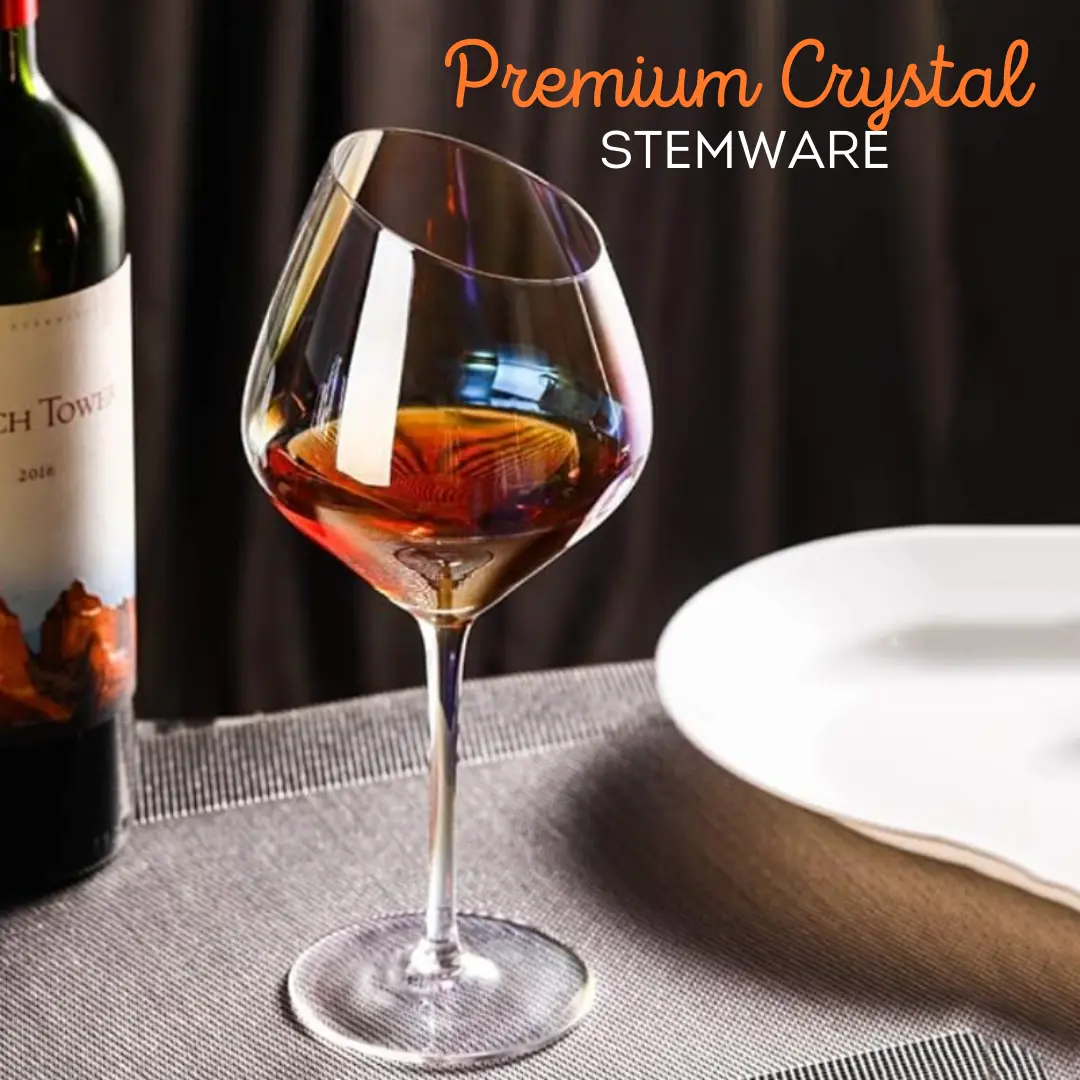
The single biggest upgrade you can make to a home tasting is serving in proper crystal wine glasses. The thin rim, the light-refracting clarity, and the carefully shaped bowl of quality crystal all contribute to a more expressive and enjoyable tasting experience.
You do not need varietal-specific glasses for a casual home tasting, though they are a wonderful touch if you have them. A set of good universal wine glasses will serve you well. What matters most is that every glass is clean, unscented (no detergent residue), and consistent, so everyone is tasting under the same conditions.
Luxrify's crystal wine glasses in iridescent and amber finishes add a visual element that elevates the table setting and gives guests something to admire between pours.
How Many Glasses
Ideally, provide one glass per wine per guest. For a six-wine tasting with eight guests, that means 48 glasses, which is not always practical. A more realistic approach is to provide two or three glasses per guest and have a rinse station (a pitcher of water and a dump bucket) so guests can rinse between wines.
The Tasting Order
The sequence in which you serve wines has a significant impact on how each one is perceived. Follow these principles.
Light to Full
Start with the lightest, most delicate wines and progress to the most powerful. A crisp Sauvignon Blanc should come before a rich Chardonnay. A light Pinot Noir should precede a bold Cabernet Sauvignon. This prevents heavier wines from overwhelming the palate and making lighter wines taste thin by comparison.
Dry to Sweet
If you include any off-dry or sweet wines, serve them after the dry wines. Residual sugar dulls the palate's sensitivity to acidity and tannin, so a sweet wine served early will make dry wines that follow taste harsh and flat.
Young to Old
Within the same style, serve younger wines before older ones. Aged wines tend to have more complex, subtle flavors that benefit from a warmed-up palate.
Sparkling First
If you are including sparkling wine, serve it as the opener. The effervescence and bright acidity act as a palate cleanser and set an celebratory tone for the evening.
Guiding the Tasting
You do not need to be an expert to lead a tasting. Share what you know about each wine, read the back label if you need to, and encourage guests to describe what they taste in their own words.
The Five S's
Walk your guests through the classic tasting framework.
See. Hold the glass against the white tablecloth and observe the color. Is it pale gold or deep amber? Ruby or garnet? The color reveals clues about age, grape variety, and winemaking style.
Swirl. Gently swirl the wine in the glass to release aromatic compounds. Watch the "legs" or "tears" that run down the inside of the glass; they indicate alcohol content and body.
Smell. Nose the wine before tasting. Try to identify specific aromas: fruits, flowers, spices, earth, oak. The majority of what we experience as flavor comes through our sense of smell, so this step is essential.
Sip. Take a small sip and let the wine coat your entire palate. Notice the initial impression, the mid-palate flavors, and the finish. Is it smooth or tannic? Acidic or soft? Simple or complex?
Savor. After swallowing (or spitting, for more formal tastings), pay attention to the finish. How long do the flavors linger? A long, evolving finish is the hallmark of a great wine.
Tasting Notes
Provide small notecards or a printed tasting sheet for each guest. Having a place to jot impressions helps guests remember their reactions and compare notes at the end. Include space for rating each wine, which sets up a fun reveal of everyone's favorites.
Food Pairings
The Cheese Board
A well-composed cheese board is the natural companion to a wine tasting. Follow these pairing principles.
Fresh, mild cheeses (goat cheese, mozzarella, burrata) pair with crisp whites and sparkling wines. The acidity in the wine cuts through the creaminess.
Semi-hard cheeses (Gruyere, Comte, Manchego) pair with medium-bodied reds and rich whites. These are versatile, crowd-pleasing combinations.
Aged, hard cheeses (Parmigiano-Reggiano, aged cheddar, Pecorino) pair with full-bodied reds. The concentrated flavors and crystalline texture of aged cheese stand up to powerful tannins.
Blue cheeses (Roquefort, Stilton, Gorgonzola) pair classically with sweet wines like Sauternes or Port, but also work with bold reds.
Beyond Cheese
Supplement the cheese board with accompaniments that enhance without competing. Marcona almonds, dried apricots, fig jam, honeycomb, olives, and thinly sliced cured meats like prosciutto and salami all work beautifully. Provide plain bread or neutral crackers as palate cleansers between wines.
Avoid strongly spiced or heavily flavored foods that can overpower the wine. The food should support the tasting, not steal the spotlight.
Creating the Right Ambiance
Music
Soft background music enhances the atmosphere without interfering with conversation. Jazz, classical, bossa nova, or acoustic playlists work well. Keep the volume low enough that guests never have to raise their voices.
Dress Code
Suggesting a smart-casual or cocktail dress code elevates the evening from a get-together to an event. When guests dress up slightly, they naturally bring a more attentive, celebratory energy.
Pace
Allow ten to fifteen minutes per wine. Rushing through a tasting defeats the purpose. Give guests time to discuss each wine, revisit earlier pours, and enjoy the food. A six-wine tasting should last about 90 minutes to two hours, leaving room for relaxed conversation throughout.
After the Tasting
End the evening by revealing everyone's favorites and comparing notes. Open a crowd-pleasing bottle for continued sipping and conversation. If you did a blind tasting, the big reveal is always a highlight.
Send guests home with a printed or emailed summary of the wines tasted, including producers, vintages, and approximate prices. They will appreciate being able to find their favorites again, and it extends the experience beyond the evening itself.
Your Hosting Checklist
- Five to eight wines, arranged light to full
- Proper crystal wine glasses (at least two per guest)
- White tablecloth for color assessment
- Good lighting
- Ice bucket for whites
- Cheese board with accompaniments
- Tasting notecards and pens
- Water for rinsing glasses and palate cleansing
- Dump bucket for spitting or rinsing
- Background music playlist
With these elements in place, you are ready to host a wine tasting that your guests will remember and ask you to repeat. Visit Luxrify's shop to find crystal stemware that makes every tasting feel like a special occasion.
Shop Our Crystal Wine Glasses
Looking for the perfect wine glasses? Explore Luxrify's handcrafted crystal collection:
- Iridescent Wine Crystal Stemware -- Our bestselling rainbow-shimmer crystal wine glasses
- Amber Wine Crystal Stemware -- Warm amber-toned crystal for a cozy dining experience
- View All Wine Glasses
Free shipping on all orders. 30-day satisfaction guarantee.