
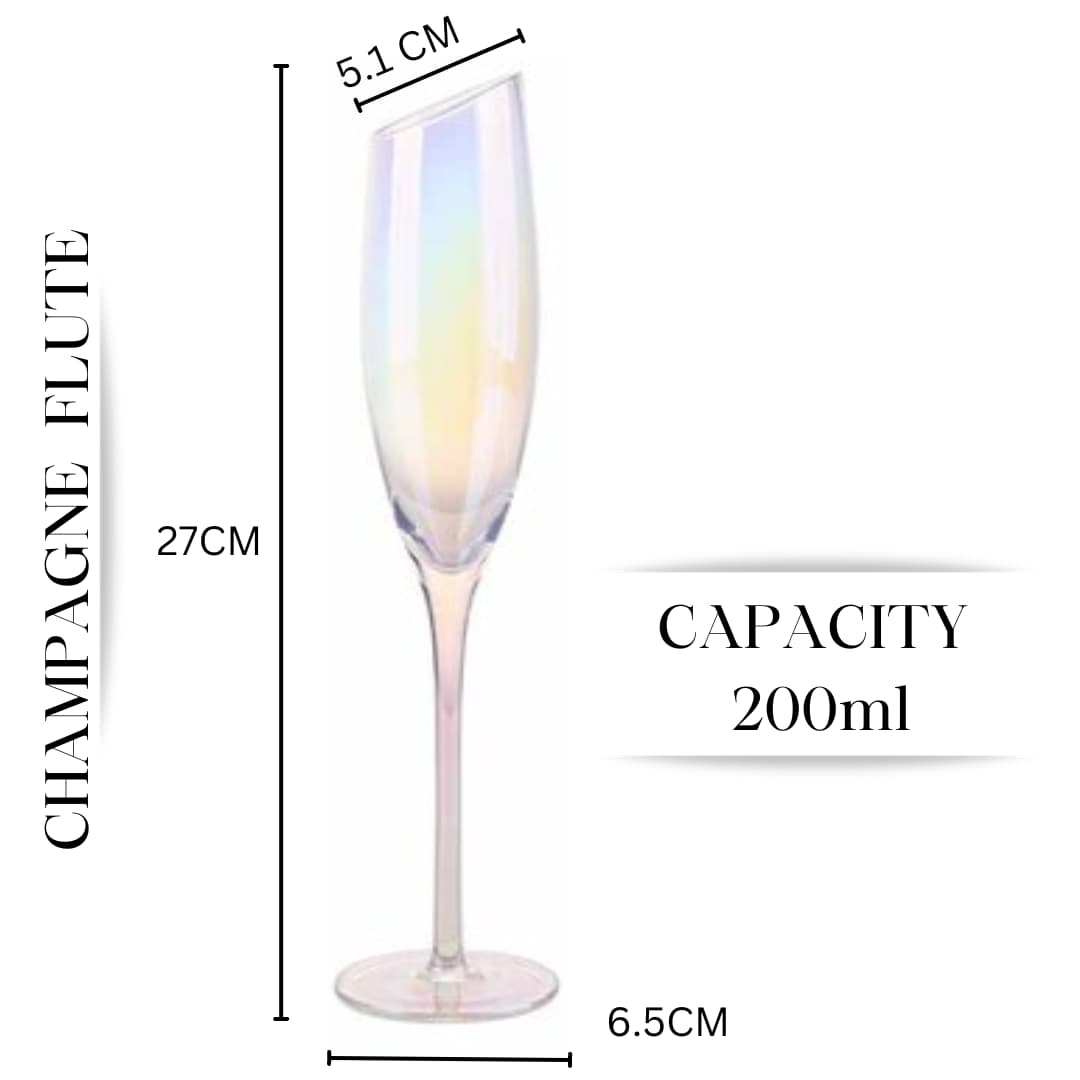
Few objects carry as much romantic mythology as the champagne coupe. With its wide, shallow bowl and elegant stem, the coupe has been the subject of legends, the centerpiece of glamorous eras, and the focal point of a long-running debate among wine enthusiasts. Its story stretches back centuries, winding through royal courts, prohibition-era speakeasies, Hollywood parties, and modern cocktail bars. Understanding the history of this glass enriches every sip you take from one.
The History of the Champagne Coupe at a Glance
Three and a half centuries of the coupe, in one timeline.
| Era | What Happened |
|---|---|
| 1660s | The earliest known coupes appear among English glassmakers experimenting with wide-bowled vessels for sparkling wine |
| 1787 | Porcelain bowls reportedly modeled on Marie Antoinette are made for her dairy at Rambouillet -- the kernel of the famous myth |
| 1920s-1930s | The coupe's golden age: speakeasies, jazz clubs, and high-society parties adopt it as the glass of glamour |
| 1930s-1960s | Hollywood cements its status; champagne towers of stacked coupes become a party spectacle |
| 1970s-1980s | The flute displaces the coupe as wine culture prioritizes preserved bubbles and concentrated aromas |
| 2010s-today | The craft cocktail movement and vintage aesthetics drive a full revival |
The Marie Antoinette Legend
The most famous story about the champagne coupe claims it was modeled after the breast of Marie Antoinette. It is a captivating tale -- the doomed French queen, the luxury of Versailles, a glass shaped to celebrate her beauty. Variations of the legend substitute other historical figures, including Madame de Pompadour, Josephine Bonaparte, and Helen of Troy. The story is too good not to repeat, which is why it has endured for well over a century.
Unfortunately, the historical evidence does not support the claim. The coupe shape appeared in England as early as the 1660s, more than a century before Marie Antoinette was born in 1755. Glass historian and author Ben Carter has traced the earliest known coupes to English glassmakers who were experimenting with wide-bowled drinking vessels for sparkling wine long before the French court popularized champagne consumption.
That said, there is a kernel of truth buried in the legend. In 1787, porcelain bowls modeled after Marie Antoinette's breast were reportedly created for the queen's dairy at the Rambouillet chateau. These were not champagne glasses but rather bowls for drinking milk in her private retreat. Over time, the story appears to have migrated from porcelain dairy bowls to champagne coupes, merging two separate objects into one irresistible myth.
Even if the legend is not literally true, it speaks to the coupe's association with sensuality, indulgence, and aristocratic elegance. The glass has always carried an air of romantic excess, and that reputation is part of what makes it endure.
The Golden Age of the Coupe
The champagne coupe reached its peak popularity in the early to mid-twentieth century. During the 1920s and 1930s, the coupe was the glass of choice in American and European high society. It appeared at cocktail parties, jazz clubs, and grand hotel bars. The Prohibition era, paradoxically, contributed to its mystique -- champagne was a symbol of the forbidden pleasures available in speakeasies, and the coupe became the glass associated with glamorous rebellion.
Hollywood cemented the coupe's status. Films of the 1930s through the 1960s almost always showed champagne being poured into coupes. Stars like Audrey Hepburn, Cary Grant, and Marilyn Monroe were photographed holding them. The champagne tower -- an architectural arrangement of coupes stacked in a pyramid, with champagne poured from the top to cascade down -- became a signature spectacle at parties and film premieres.
The coupe defined an era of entertaining that valued style, spectacle, and sophistication. It was not just a glass; it was a prop in the theater of social life.
The Flute Takes Over
By the 1970s and 1980s, the champagne flute began to displace the coupe. Wine professionals argued, correctly, that the coupe's wide bowl caused champagne to lose its bubbles too quickly and dispersed aromas rather than concentrating them. The flute, with its narrow profile, preserved effervescence and directed aromas toward the drinker's nose. As wine culture became more focused on tasting and evaluation, the practical advantages of the flute won out.
For several decades, the coupe was seen as old-fashioned, a relic of an era that prioritized appearance over substance. It largely disappeared from restaurants, wine bars, and formal dining settings. The flute reigned supreme, and anyone who suggested serving champagne in a coupe risked being corrected by a well-meaning wine enthusiast.
The Modern Revival
In the 2010s, the coupe made a dramatic comeback, driven by the craft cocktail movement. Bartenders rediscovered the coupe as an ideal vessel for stirred and shaken cocktails -- Daiquiris, Sidecars, Manhattans, and Gimlets all look and feel elegant in a coupe. The wide bowl makes it easy to express citrus oils over the surface of a drink, and the shape sits beautifully in the hand.
As the coupe returned to bar counters, it inevitably found its way back to champagne service. Modern entertaining, influenced by mid-century aesthetics and a renewed appreciation for vintage style, embraced the coupe as a design statement. Instagram and food photography further boosted its popularity -- the coupe's distinctive silhouette is simply more photogenic than a flute.
Today, the coupe occupies a specific niche. It is chosen deliberately for its aesthetic appeal and its associations with a particular era and mood. No one is arguing that the coupe is the technically optimal glass for champagne -- but not every occasion calls for technical optimization. Sometimes the experience is about how the glass makes you feel, and the coupe delivers a feeling that no flute can replicate.
Choosing a Coupe Worth Owning
If the coupe's history and aesthetic appeal to you, it is worth investing in a quality set. Look for coupes made from thin crystal rather than thick glass. The rim should be fine and smooth, and the bowl should sit at a comfortable height on the stem. A well-made crystal coupe feels substantial without being heavy, and it catches light in a way that adds sparkle to any table.
A set of crystal coupes is versatile beyond champagne. Use them for cocktails, for serving small desserts like panna cotta or sorbet, or as decorative pieces on a bar cart. They are conversation starters, and now you have the history to fuel that conversation.
Explore our crystal glassware collection to find coupes and other champagne glasses that honor the traditions behind them. Every glass has a story, and the coupe's story is one of the best.
Shop Our Crystal Champagne Flutes
Celebrate in style with Luxrify's crystal champagne flutes:
- Iridescent Crystal Champagne Flutes -- Rainbow shimmer champagne flutes
- Amber Crystal Champagne Flutes -- Warm amber crystal flutes
- View All Champagne Flutes
Free shipping on all orders. 30-day satisfaction guarantee.

