
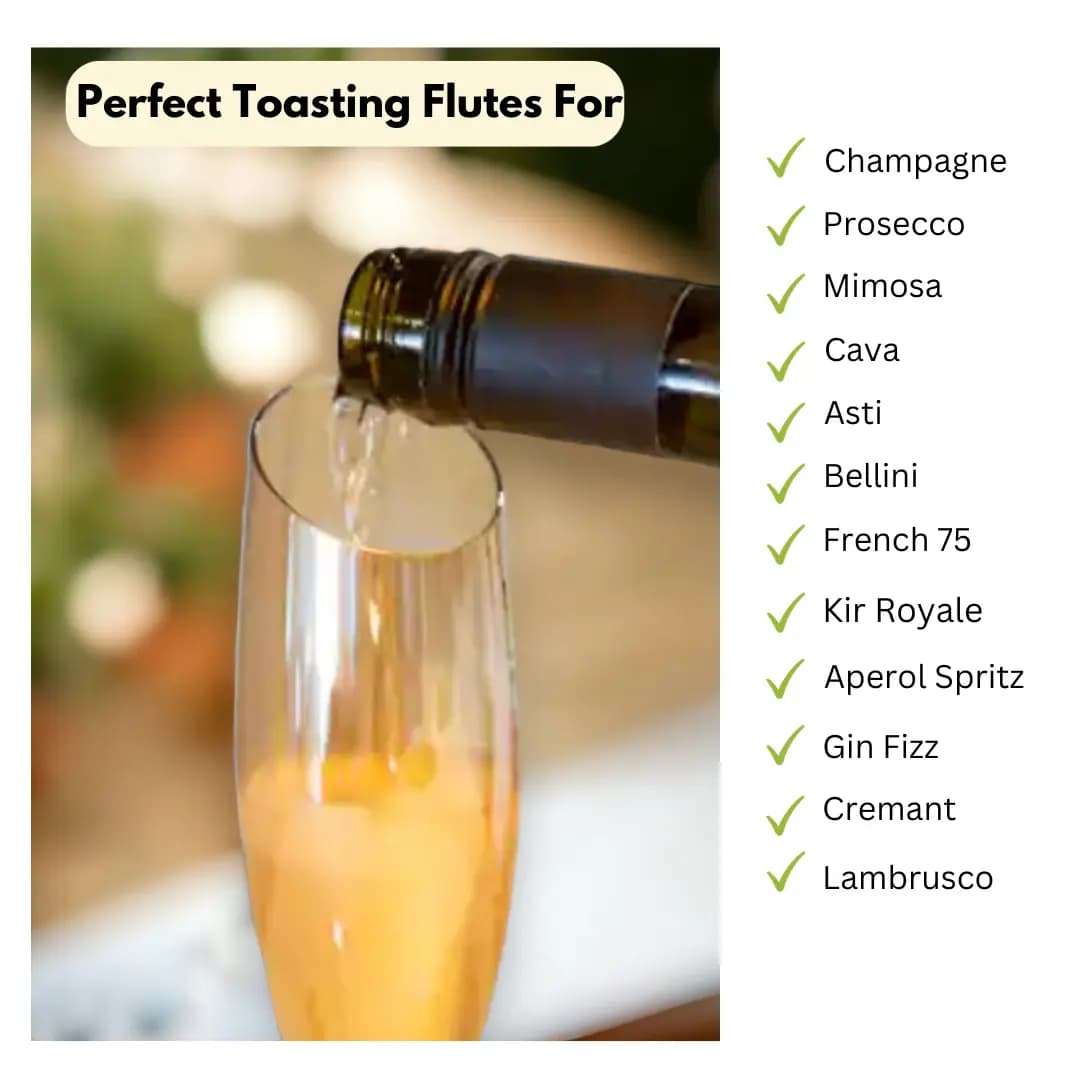
Prosecco has become one of the most popular sparkling wines in the world, and for good reason. It is approachable, refreshing, and versatile enough to pair with everything from appetizers to dessert. Yet despite its popularity, most people pour Prosecco into whatever glass happens to be closest -- a standard wine glass, a random flute, sometimes even a tumbler. Prosecco deserves better than that. The right glass can transform an ordinary pour into something genuinely delightful.
Best Prosecco Glasses at a Glance
Here is how the main glass styles compare for serving prosecco, based on the recommendations in this guide.
| Glass Style | Why It Works for Prosecco | Best Occasion |
|---|---|---|
| Tulip glass | Wider mid-section releases fruit and floral aromas; tapered rim keeps bubbles lively | Everyday Prosecco DOC and aperitivo hour |
| Slightly wider flute | Shows off rising bubbles without fully suppressing the aromatic bouquet | Toasts, parties, and celebrations |
| Small white wine glass | Extra room lets more complex bottles open up and breathe | Premium Prosecco Superiore DOCG from Conegliano and Valdobbiadene |
| Classic narrow flute | Concentrates bubbles well but mutes prosecco's fragrant fruit and floral notes | Acceptable fallback when it is the only stemware on hand |
What Makes Prosecco Different from Champagne
To understand why Prosecco benefits from specific glassware, it helps to understand what makes it different from other sparkling wines. Prosecco is made primarily from the Glera grape in the Veneto and Friuli Venezia Giulia regions of northeastern Italy. Unlike Champagne, which undergoes a second fermentation in the bottle, Prosecco is typically made using the Charmat method, where the secondary fermentation happens in large pressurized tanks.
This production difference has real consequences for the wine's character. Prosecco tends to have softer, larger bubbles than Champagne. Its flavor profile leans toward fresh fruit -- white peach, green apple, pear, and sometimes tropical notes -- with floral aromatics like acacia and wisteria. It is lighter-bodied and generally lower in alcohol than Champagne, making it a natural choice for daytime drinking, aperitivo hour, and warm-weather gatherings.
These characteristics mean that Prosecco does not necessarily perform its best in the same glass that flatters Champagne. It needs a glass that highlights its aromatic generosity and works with, rather than against, its softer effervescence.
The Best Glass Shapes for Prosecco
The classic champagne flute works reasonably well for Prosecco, but it is not the ideal match. A flute's narrow bowl concentrates bubbles effectively, which is great for Champagne's fine, persistent mousse. But Prosecco's softer carbonation does not need that level of concentration, and the narrow opening can actually suppress the aromatic floral and fruit notes that make Prosecco so enjoyable.
A slightly wider flute or a tulip-shaped glass is a better choice. The tulip offers a wider mid-section that gives the wine room to release its aromas, while the tapered rim directs those aromas toward your nose. You get the visual appeal of watching bubbles rise through the glass, plus full access to the wine's fragrant bouquet.
Some Italian wine professionals recommend an even wider glass -- closer to a small white wine glass -- for premium Prosecco Superiore from the DOCG zones of Conegliano and Valdobbiadene. These higher-quality Proseccos have more complexity and benefit from additional room to breathe. For everyday Prosecco DOC, though, a tulip or slightly wide flute strikes the right balance between preserving bubbles and showcasing aroma.
Explore our crystal glass collection to find tulip and flute shapes that bring out the best in Italian sparkling wine.
Why Crystal Matters for Prosecco
Prosecco is a delicate wine. Its flavors are subtle rather than bold, and its bubbles are gentle rather than aggressive. A thick, heavy glass can overwhelm those delicate qualities. Crystal glassware, with its thinner walls and finer rim, lets the wine express itself without interference.
The thin rim of a crystal glass creates a smoother transition from glass to palate. You taste the wine first, not the glass. This might seem like a minor detail, but once you compare the experience of drinking Prosecco from a thick-rimmed everyday glass versus a fine crystal flute, the difference is immediately apparent. The crystal glass feels more refined, and the wine tastes cleaner and more vibrant.
Crystal also refracts light in a way that makes the pale straw-gold color of Prosecco look its best. If you have ever admired the way light plays through a glass of sparkling wine, you were likely looking through crystal.
Serving Tips to Get the Most from Your Glass
The glass is only part of the equation. How you serve Prosecco also affects the experience. Keep the bottle well chilled -- between 6 and 8 degrees Celsius is ideal for most Prosecco. This is slightly colder than the recommended temperature for Champagne, reflecting Prosecco's lighter, more refreshing character.
Pour gently down the side of the tilted glass to preserve as many bubbles as possible. Fill the glass about two-thirds full to leave room for aromas to gather above the wine's surface. And drink it relatively soon after pouring. Prosecco's softer carbonation means it loses its sparkle faster than Champagne, so lingering over a glass for too long will leave you with a flat drink.
If you are serving Prosecco at a gathering, pour in smaller amounts and top up glasses more frequently rather than filling them to the brim. This keeps every sip fresh and lively.
Building an Italian-Inspired Glassware Collection
If you love Prosecco, chances are you also enjoy other Italian wines -- a crisp Pinot Grigio, a bright Vermentino, or perhaps a bold Barolo. Building a glassware collection that serves you well across these styles means investing in versatile shapes made from quality crystal.
A set of tulip-shaped sparkling wine glasses covers your Prosecco needs beautifully, and those same glasses work well for Champagne, Cava, and other sparkling wines. Pair them with a set of all-purpose wine glasses for still wines, and you have a collection that handles virtually any bottle you bring home.
Quality crystal glassware is an investment that pays for itself over time. It elevates every drink, lasts for years with proper care, and makes even an ordinary weeknight feel a little more special. Browse our full collection to find pieces that bring Italian elegance to your table.
Shop Our Crystal Champagne Flutes
Celebrate in style with Luxrify's crystal champagne flutes:
- Iridescent Crystal Champagne Flutes -- Rainbow shimmer champagne flutes
- Amber Crystal Champagne Flutes -- Warm amber crystal flutes
- View All Champagne Flutes
Free shipping on all orders. 30-day satisfaction guarantee.


